 That Reptile Blog – Reptile, Amphibian and Exotic Pet Care and Information

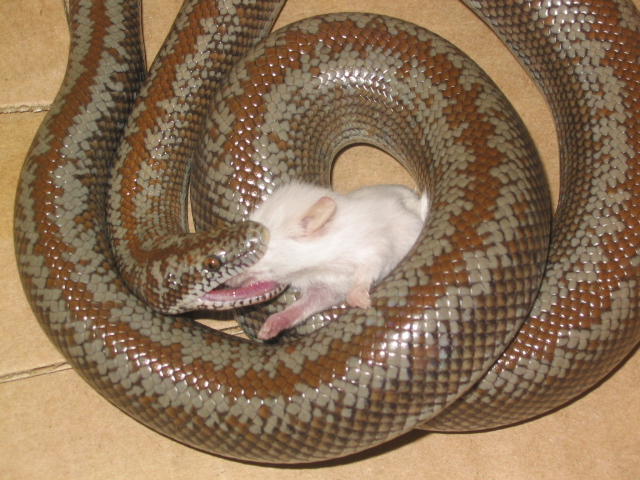 Spring is in the air in the Northern Hemisphere, and snake keepers are busy preparing for another breeding season. Species that range into temperate regions are especially likely to be stimulated to reproduce as the seasons change. For those interested in boas, I highly recommend working with North America’s beautiful Rosy Boa (Lichanura trivirgata). Small, hardy and live-bearing, this gem among constrictors is a great choice for both first- time and advanced breeders.
A Beautifully Patterned Northern Boa
Three subspecies of Rosy Boa occupy a relatively limited range – Southern California, Southwestern Arizona, Baja California and Sonora, Mexico. Their colors are quite varied, and a number of captive bred color strains are also available.
I’ve been lucky enough to come across them several times in my travels. Two spectacularly colored individuals stand out in my memory – an almond-striped, creamy specimen that emerged as darkness fell on the desert in Baja, Mexico and a pink and orange clad individual in Southern California.
Reproduction
Maxing out at 40 inches in length, these stout constrictors are more easily accommodated than most related species. Temperatures of 78-85F, with a warmer basking spot and, if possible, a nighttime dip to 70-72F, suit them well.
Breeding is most likely if the pair is maintained at 52-54 F for 6-8 weeks, but normal changes in home temperatures may be enough to stimulate reproduction in some cases. Animals selected for breeding should be at least 24 inches in length and 2 years of age.
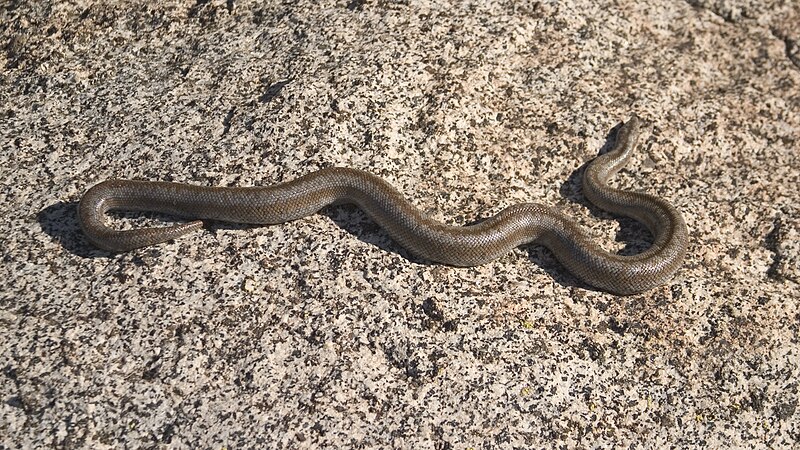 Copulation generally occurs from March to August, with birth following 100-140 days later. The youngsters, usually 3-6 in number, are stoutly built and usually vigorous. At an average size of 10-14 inches, they are large enough to take pink mice as soon as their first shed is completed.
The USA is home to another boa, the cold tolerant Rubber Boa, Charina bottae.
Further Reading
A USGS study of the Rosy Boa in California is posted here.
This Video shows a nice litter of Rosy Boas.
Rosy Boa Eating image referenced from wikipedia and originally posted by Cole Shatto
Rosy Boa image referenced from wikipedia and originally posted by Shane O Pinnell




Hello Frank,
Was curious about the elevation range of rosys. While on vacation recently I found a 16″ all grey (no stripes) rosy at Mono Village/Twin Lakes near Bridgeport, Ca. at the 7500 ft elevation. I almost stepped on it while fishing at the upper lake. Is this unusuall to find a rosy at such a high elevation? Thanks for your time. Ray
That is probably a rubber boa that you found. There are a bunch up there and they look a lot like rosy’s only they are a solid color.
Hi,
Thanks for your input. I’d like to find rubber boas in the wild, have only worked with them in captivity, during my years at the Bronx Zoo. The animals I referred to in the article, however, were Rosy Boas. Best, Frank