 That Reptile Blog – Reptile, Amphibian and Exotic Pet Care and Information

This article is one of a series in which I will provide a brief introduction to both popular and rarely-kept amphibians, reptiles and invertebrates. I’ll cover such topics as unique habits in the wild, common mistakes or concerns in captive care, pet pros and cons, little-known husbandry tips and so forth. Detailed care articles will follow…until then, I would enjoy receiving your questions and comments. Today we’ll take a look at the Dwarf Chameleons (Brachypodion spp.).
Small and Hardy
South Africa’s Dwarf Chameleons seem, at first glance, to be an excellent choice for the aspiring chameleon keeper. Indeed, their small size (most top out at 7 inches or so) is an important factor – many of the larger chameleons need a room-sized enclosure if they are to thrive. All are now protected by the government of South Africa, but the Natal Midlands Dwarf Chameleon (Bradypodium thamnobates) and the Cape Dwarf Chameleon (B. pumilum) are regularly bred by hobbyists.
Also, Dwarf Chameleons hail from extremely harsh environments, and so are far hardier than most of their relatives (or, for that matter, most lizards). In the Southeastern USA, they can be often be kept outdoors year-round, and the best breeding results have been obtained under these conditions. Several species hibernate in the wild and are unaffected by short-term exposure to freezing temperatures; on the other hand, most are stressed above 85 F or so.
A Caution Regarding Feeding
 Adult Dwarf Chameleons are just the right size to take crickets and mealworms, but they will not thrive for long on such a diet. Dietary variety is critical to their health and well-being, as they are adapted to prey on a wide variety of invertebrates.
The ZooMed Bug Napper Insect Trap is an invaluable aid in collecting flying insects such as moths, beetles and flies – the Chameleons reactions to these will leave no doubt as to their value in improving your pets’ quality of life.
Caterpillars, Snowy Tree crickets, Orange-spotted Roaches, Field Crickets Termites, Grasshoppers, Katydids, Sow Bugs and a wide variety of other invertebrates will also be consumed with great enthusiasm. Houseflies are, in my opinion, vital when rearing young Dwarf Chameleons.
Be sure to feed a nutritious diet to any Domestic Crickets that are utilized. During periods when crickets comprise the bulk of the diet, powder most meals with supplements, alternating among Reptivite with D3, ReptiCalcium and ReptoCal. I do not use supplements when relying upon wild-caught invertebrates.
Further Reading
You can read more about the 18 species of Dwarf Chameleon here.
Please see my articles on Collecting Feeder Insects for more info on this important topic.
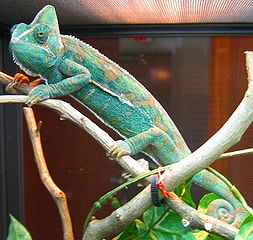
Brachypodion pumilium male image referenced from wikipedia and originally posted by Michnieuwoudt
Dwarf Chameleon image referenced from wikipedia and originally posted by Andrew Gruswitz


Thanks Frank. I didn’t understand how small these dwarf Chameleons could be until I saw a photo of a juvenile which is about the size of a thumbnail.
Wow, that ZooMed Bug Napper Insect Trap seems like it would be invaluable to any lizard owner!
Hello Brett, Frank Indiviglio here.
Thanks for your note; yes, one of the most amazing lizards to be found. There are smaller vertebrates – a few amphibians, but chameleons seem so “complicated” that such tiny examples always surprise me! In one BBC special I saw, Mr. Attenborough was holding one and made the point that within was a brain, heart, liver…just about everything we have…really something!
The ZooMed Bug Napper is a real help…you can even adjust the intake ports to allow in only tiny moths, midges if you are feeding small herps. Effectiveness hinges on placement, however, but I enjoy checking mine no matter what turns up. Perhaps you will enjoy these articles on homemade traps and collecting techniques as well.
Good luck and please keep me posted.
Best regards, Frank Indiviglio.
Hello, I am just wondering because I didn’t understand in the notes above, would they be good pets and are they allowed to be as pets if so where. Thank you Krystiella.
Hello Krystiella,
As chameleons go, they have have some good points. However, all chameleons are very difficult to keep and recommended only for those well experienced with other difficult lizards. Please let me know if you would like some ideas concerning others that are better suited as pets.
Best, Frank
Hi. I was wondering if the Cape Dwarf Chameleon would eat fruits plant’s vegetables and such? I know they mainly just eat insects but I was wondering about things like little bites of bananas, strawberries, and lettuce? And, will they eat the insects if there dead?
Hi Dana,
They are not known to take anything other than small live insects; some can be induced to take dead insects from a feeding tongs, but otherwise a variety of live species are needed to keep them healthy, best, Frank
Hi
I have a baby dwarf (body about 2.5cm long) that I got about 2 days ago (13/10/2014)
I have a lizard cage with the proper sand set up.
I bought some meal worms (small ones) but it does not seem to be feeding.
My local pet shop does not have small enough crickets or roaches.
This concerns me, any advice please?
Thanks
M
Hello,
Mealworms should be avoided, and crickets alone are not an adequate diet…they need a good deal of variety. You can order small insects online…housefly cultures are very useful, also phoenix worms, silkworms; smaller crickets and roaches can be ordered as well. Please see this article for other suggestions and let me know if you need more info. Please also let me know your day/night temperatures, UVB exposure, and other details as the animal will not feed w/o proper environmental conditions. Best, Frank