 That Reptile Blog – Reptile, Amphibian and Exotic Pet Care and Information

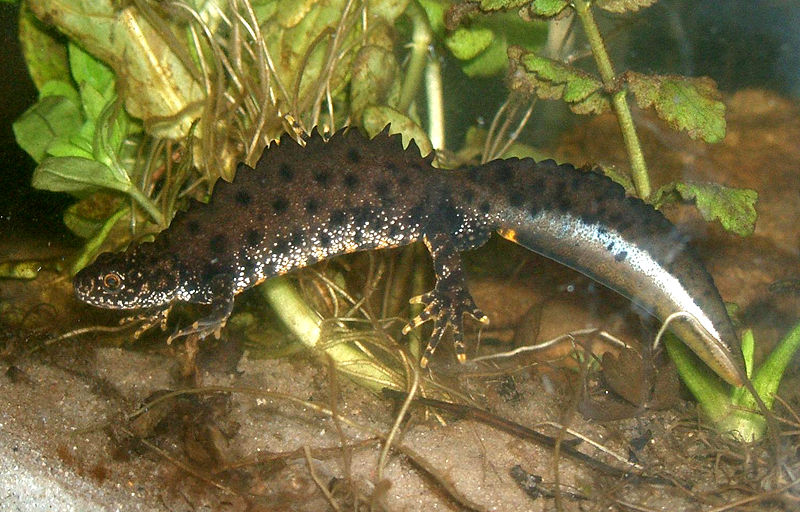
Male Great Crested Newts undergo an amazing change in appearance during the breeding season. In Part I of this article I introduced the natural history of this most beautiful newt, and discussed how to bring it into breeding condition. I’ll cover breeding details and raising the larvae here.
Courtship and Egg Deposition
Breeding male newts tend to fight and, although severe damage is rarely inflicted, less dominant animals may become stressed and cease feeding. Courting males position themselves near females and appear to direct pheromones towards them with their tails. Females thus stimulated follow the males, push against their tails, and eventually pick up the spermatophore that the male has dropped.
Several hundred eggs are laid, each being individually attached to an aquatic plant. Females use their rear legs to bend a plant leaf around each egg – quite an ordeal, and well-worth watching!
Adults may consume eggs and so should be removed from the aquarium after egg-laying has been completed. If prevented from returning to land after breeding, adult crested newts usually become quite stressed, thrashing about wildly. Some subspecies, however, can be habituated to a more-or-less permanent aquatic existence.
Raising the Larvae
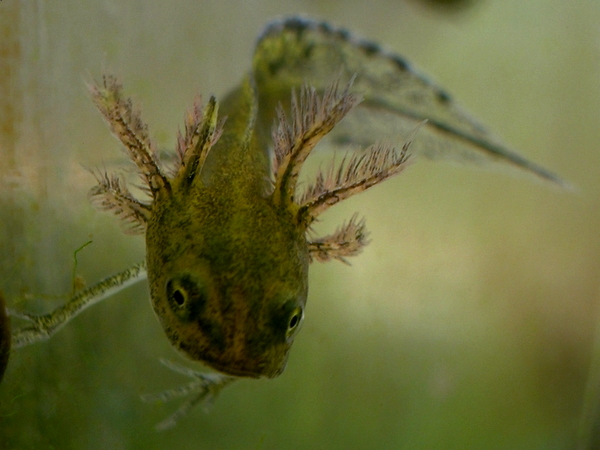 Crested Newt larvae generally hatch within a month and transform into the terrestrial phase within 3 months, at which point they average 2.4 inches in length.
The larvae can be raised on chopped live blackworms, brine shrimp, daphnia and similar foods; new metamorphs can be offered 10 day old crickets, blackworms, termites and tiny sow bugs. Sexual maturity occurs in approximately two years, at which time they will re-enter water to breed.
An Even More Flamboyant Relative
A close relative, Triturus vittatus ophryticus develops an incredibly high crest that starts at the nose area and ends at the tail. This species is now showing up in the pet trade, and can be bred in a similar manner to the Crested Newt.
Further Reading
Please see a book I’ve written, Newts and Salamanders, for more on the care and natural history of Crested Newts and their relatives.
You can learn more about the natural history of each newt in the genus Triturus here.
Larval Crested Newt image referenced from wikipedia and originally posted by Piet Spaans