 That Bird Blog – Bird Care and History for Pet Birds

Overview
Exceeding even the most gifted parrots in their ability to mimic human voices and other sounds, hill mynas are the most popular cage birds in Asia, and have long been in demand in the USA. Responsive and inquisitive, mynas make endearing pets for those with the time and space to devote to their care.
Hill mynas belong to the family Sturnidae (the starlings), which contains over 110 species including, it may surprise you to learn, the ubiquitous European starling, Sturnus vulgaris. Note the species’ name!…starlings have quite a bad reputation in some places – roosting by the thousands on buildings, devastating crops and displacing native hole-nesting birds such as woodpeckers. However, they are also valued as important insect predators and have other redeeming qualities. Other family members are quite rare – the brilliant white Rothschild’s myna, Leucopsar rothschildi, for example, occupies only in one small forest patch in Bali, Indonesia.
Physical Description
At least 10 subspecies of hill myna, ranging in size from 10-15 inches, have been identified. All are glossy black, tinted with purple, green and turquoise, and have white wing patches. The bill is red with a yellow tip, and fleshy yellow wattles decorate the face.
Range and Habitat
The hill myna occupies a huge range that stretches from eastern India (with an isolated population in the Western Ghats), Nepal and Sri Lanka east to southern China and south through Southeast Asia to Borneo, the Philippines and Flores. It prefers forest edges and cultivated land in areas of high rainfall, and rarely descends to the ground.
Status in the Wild
Habitat loss and collection for the pet trade threaten populations in some areas of the range, while populations are expanding in places where small scale agriculture has created edge habitat and forest clearings. Listed on Appendix II of CITES.
People in Assam, India set out nest hollows to induce mynas to breed in easily accessible locations, so that the young may be removed for sale. A project in Thailand is exploring the possibility of large scale breeding in outdoor enclosures.
Check Back Friday for the rest of this article.


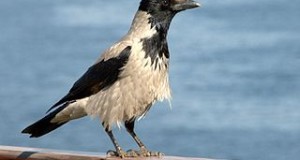

photographs shown seem to be of indian common myna.amar
Hello Amar,
Sorry for the delay in responding.
I somehow glanced right over that photo …..you are quite right, thanks very much for taking the time to alert me.
Your future thoughts and comments would be much appreciated.
Best regards, Frank
this is a very good site for all of us myna lovers out there. i have an 8 year old myna who died recently. his death broke our hearts since she became a part of our family.losing my myna felt like losing a family member. mynas are very, very smart and can even act like humans. my myna was perfectly healthy. one day we noticed her change of voice.i took her out the cage to give her vitamins. she started to vomit blood. less than 5 minutes she died. she was perfectly healthy prior to this. no change of appetite, weight, droppings. everything was normal except she sounded as if she had a sore throat. has anyone here have similar experience. could it have something to do with how they cannot take too much iron? i was feeding her dog food and kiddie vitamins. any advice is greatly helpful since im buying a new one and i want to make sure the new myna gets utmost care. thank you.
Hello Henry, Frank Indiviglio here.
Thanks for your interest in our blog and for your kind words.
I’m sorry to hear about your loss; I understand your feelings – of the many thousands of birds of numerous species that have been under my care, I can honestly say that I recall each and every hill myna…they really are quite special.
Iron storage disease is a concern with mynas but, unfortunately, the symptoms you describe can be related to any number of problems. Only an autopsy would give you a definitive answer.
I would suggest a different diet for your new bird, one more in line with that described in this article. While dog kibble and children’s vitamins have been used on a number of birds with varying success, the levels of protein, vitamins, fats, carbs and other nutrients in these differ greatly from that required by most birds. With so many species-specific foods and vitamins available, there really is no longer any reason to experiment with other foods. As mentioned in the article, you should also introduce more variety in the form of fruits and insects.
Your best option would be to speak with your breeder or supplier, and start the bird out on the diet it has grown accustomed to. Please feel free to write in with the details of that diet, and we can then introduce changes gradually if need be.
For further information on iron storage disease and other myna dietary concerns, please see the following of my articles on this blog:
Avian Nutritional Considerations
Iron Storage Disease and Citrus Fruit
Good luck, enjoy and please keep me posted.
Best regards, Frank Indiviglio.
Dear Mr. Frank Indiviglio,
I would like to know that how an infection below the lower beak of a 3 months old hill mynah can be treated and whats the suggested died at this stage?
With regards,
Atri Sharma
Siliguri, India
Hello, Frank Indiviglio here.
Thanks for your interest in our blog. Unfortunately, it’s not possible to provide any useful advice via email…a veterinarian needs to determine if the infection is fungal, bacterial or viral, and also the species of micro-organism involved; otherwise, the medication used might not be effective. It’s also important to make sure that the infection has not moved from the bill area into the body/blood supply system itself. This can happen quickly, and once it does treatment is much more difficult.
Topical human antibiotics can be applied in an emergency, but are not often effective; local bird breeders are often extremely knowledgeable, more so than many vets, as to handling such situations…perhaps that is an option?
At 3 months the bird can be fed the adult diet.
Sorry I could not offer any specific advice,
Good luck and please keep me posted.
Best regards, Frank Indiviglio.
Hello,
Please help me. Myna birds are plentiful in the Philippines most especially on summer. But I have a problem because I don’t know if I could bring them on from the Philippines to Canada. Please let me know how to deal with it.
Thanks,
Hever
Hello Hever, Frank Indiviglio here.
Thanks for your interest in our blog. Birds imported into Canada must have a permit from the Canadian Food Inspection Agency (even though they are pets, not food!). Please check here for further details.
You’ll also need to look into the Philippines export procedures…most countries require testing for avian flu and other diseases.
Good luck and please keep me posted.
Best regards, Frank Indiviglio.
Dear Mr. Frank Indiviglio,
I have a hill myna and from 20 days ,,suffering from sore throat
Please help me and suggest me some medicine so that i can able to cure my myna.
i have given him lots of Grapes is it case of her ill ness..Now my myna unable to speak..as where i stay i have not doctor who can help me …you are my last hope please help me.
Regards,
Rakesh Sharma
India
Hello,
I’m sorry for your trouble but unfortunately there is no way to diagnose an illness from a description of symptoms. If the bird is otherwise behaving normally, but not speaking, I would not be concerned…many individuals go through periods when they will not speak. If there are other symptoms, and no doctor is available, try to locate a local myna owner with experience, or a bird club or bird interest group. Zoos in the area may be able to provide some help as well.
Sorry I could not be of more help, Good luck and please keep me posted,
Best regards, Frank
Hello sir,
I have a myna bird of three years old. Now she is not well. She can’t stand properly and she is shivering . I don’t know wat to do. plz help my bird.
Hello Sriya,
Unfortunately it is not possible to diagnose your bird’s condition by symptoms alone…a veterinary visit is necessary. I hope all goes well, please keep me posted, Frank
Hi really a good blog..I have recently purchased a pair of hill myna..my myna enjoy milk carrot egg in diet recently it’s diet decreased and regurgitate food.kindly suggest some tips how to keep them healthy as I am new to pet myna.
Hello,
Thanks for the kind words. I’ve always fed as described in Part II of the article (please see here); I have used hard-boiled egg and carrot, but not milk. If commercial myna pellets are not available, it would be best to contact a local breeder to see what types of diets are used (there are many options…I do not know where you are located). Regurgitation and appetite loss can be due to poor diet or a health problem…no way to diagnose, unfortunately, without a veterinary exam. Please let me know if you need more info, frank
Hi where I can place my mynahs cage in room or velcony? I am thinking if I place it room would he can sleep as I walk and keep my ligbt on untill 2-3am
He may be able to sleep if a dark cover is placed over the cage, assuming that does not raise the temperature too much. A balcony is ok if temperature is agreeable, protected from rain and cats or other predators. best, Frank
Hi Frank,
I recently got a Hill Mynah, around 7 to 9 months old male. Its wattles are still not fully grown. its very active and makes lot of sounds. Last 5 days it has started to pluck feathers or is it molting.. ? I want to know their molting cycle.. please provide some info. Also it also plucks and tears lot of paper kept under his cage to collect waste.. it tears it into pieces… is it that it gets less excercise and trying to be playfull or is it getting frustrated?
Mynah’s molt once to twice a year, so unless it’s behavior has changed, then it is nothing to worry about. It sounds like your bird is just creating additional nesting as well which is normal.