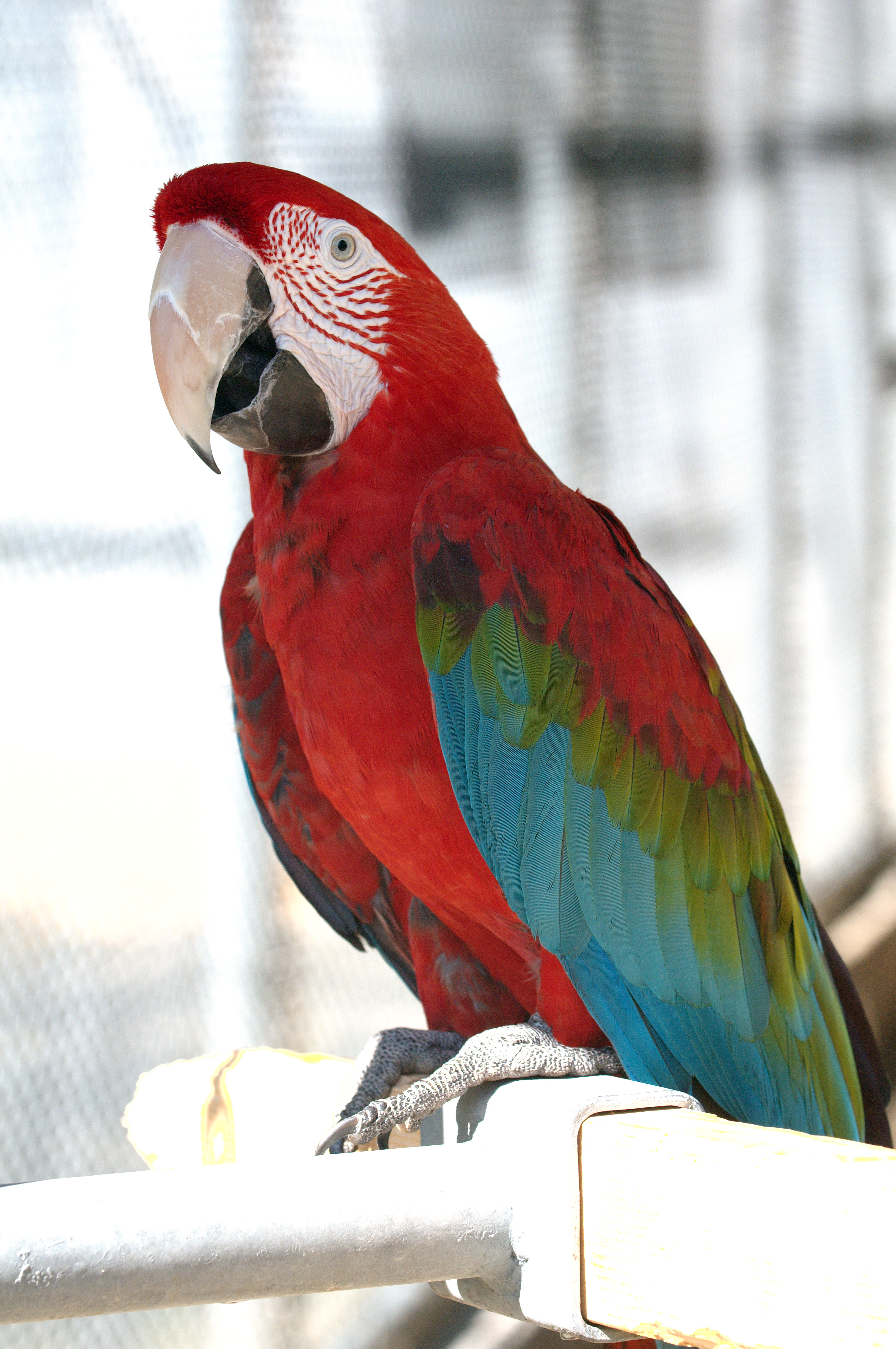
 Educators at an animal rescue center in the UK got a rude surprise when they recruited “Mr. T” to visit local schools as part of a conservation-themed program. The 7 year-old Green-Winged Macaw was friendly and eager to show off his speaking abilities, but most of what he said was not fit for classroom use. Before coming to the rescue center, Mr. T had lived in a private home, and had picked up a huge vocabulary…unfortunately, almost all of it consisted of curses and insults!
Un-learning Bad Habits?
One rescue center employee is working with Mr. T to see if he might be taught to stop cursing. In my experience, however, teaching a macaw to speak is easier than teaching it to forget what has been learned (much like 3 year-old children who pick up the “wrong” words!).
A related and very interesting phenomenon is unfolding right now in several Australian cities. Cockatoos that have escaped from captivity are teaching entire flocks of wild individuals to speak! Please see this article for the very amusing details.
Fortunately, the rescue center where Mr. T resides is home to “well-behaved” wallabies, kangaroos, scorpions and other animals, so his services as an educator are not needed immediately. It will be interesting to see who prevails, the macaw or his new teacher…I’m betting on Mr. T!
Parrots Behaving Badly
Mr. T is not the only Psittacine to be ejected from various UK forums in recent times. Awhile back, an Amazon persisted in cursing like a trooper each time he was called upon to perform in a play…despite the fact that he knew his lines perfectly (seems like he planned the “mistakes” very carefully!). Another was banned from a bar for stealing drinks, heckling pool players and starting fights by whistling at female patrons (this bird now living in more appropriate surroundings). Please see this article for details.
But one cursing parrot, an African Gray named Mishka, has done quite well for herself – winning an international speaking contest and a movie role. Please see the video and article below… her repetition of “I want to go to the Kruger Park with Sterretjie” (Sterretjie is her favorite companion, a Ring-Necked Parakeet) is priceless!
Odd Birds I have Known
 Mischievous birds of all kinds enlivened my zoo career. Margie, a Cassowary, liked to sneak up and kick her fence whenever anyone leaned against it. A fellow zookeeper allowed himself to be ambushed regularly, and the huge bird really seemed to look forward to “surprising” him. An Indian Hill Myna that called “Help, let me out” in a huge aviary was quite a hit with visitors…but not with the zoo director, when he came to record bird calls for an upcoming presentation! From overly-amorous Great Horned Owls to overly-aggressive Turacos, there have been many odd characters in my life… please see the articles below for details.
Most bird owners and bird watchers have their share of amusing or embarrassing stories…please write in with yours, so that I can share them with other readers.
Further Reading
African Gray Parrot Wins Talking Contest
An Unusual Turaco
Is a Macaw the Right Bird for You?
Cockatoos, Koels, Ibis and Honeyeaters Causing Havoc in Australia
Green Winged Macaw by Dcoetzee (Own work) [CC0], via Wikimedia Commons
Hartlaub’s Turaco by derekkeats (Flickr: IMG_2170.resized) [CC-BY-SA-2.0 (www.creativecommons.org/licenses/by-sa/2.0)], via Wikimedia Commons
 That Bird Blog – Bird Care and History for Pet Birds