Hey there! This week I wanted to talk about something a little different than my usual cichlid blog. I wanted to share some tips on how you can develop spectacular color on tropical fish in a way you may have never considered.
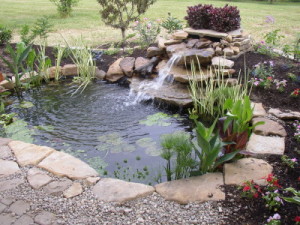
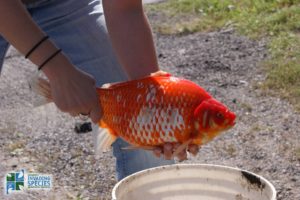
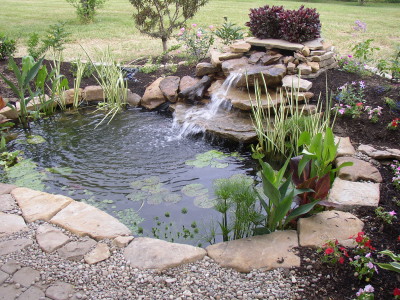
A few years ago, we moved into a house that had a small pond in the front yard. It was one of those rigid, preformed round ponds about 15 inches deep with a 50 to 80 gallon capacity. We kept a few goldfish in there the first year. They grew and made it through the winter just fine as we expected.
The following Spring, I got hold of some Astatotilapia aneocolor from Lake Victoria, 2 males 3 females to be exact. I was told by the previous keeper that they were aggressive, so I put them in a 55 gallon. I figured that would be plenty of space, since they were only 2.5 inch fish, and that they would leave each other alone for the time being.
Boy, was I wrong. One of the males showed his dominance within 2 hours of being added to the tank, and no matter what I did he couldn’t be swayed. I moved decorations around, gave him a time out for a week in a net breeder, and I even put him into an aquarium with four 3 inch Black Belt Cichlids hoping he would be intimidated into submission. He went nuts in that tank, too, and started beating up the Black Belts, so back into the original tank he went. He quickly went back to his old ways, dominating and terrorizing the other male. He finally ripped out male no. 2’s right eye.
The Great Outdoors
I wasn’t sure what I could do for him. Then it occurred to me that I did have another place for him to go. The temps were high enough outside, so why not? I decided to relocate One Eye to the pond outside to give him a chance to recover. I watched to make sure that the other fish (goldfish) didn’t bother him and they didn’t. In fact, by the end of the week ol’ One Eye was the sole proprietor of the pond.
For the next few weeks, he ate well and still came up to the surface to see who was around the pond when I went to feed. I only had a little internal filter system on the pond, and soon the water started turning green. Before long I could barely see One Eye to see his condition, but i knew he was still alive and growing, possibly even larger than the bully inside. He was eating well, besides my offerings he ate insects that fell into the pond, and I also noticed he was scraping algae off the sides.
Meanwhile the dominant male in the 55 was attaining his astounding breeding colors. He was red on top half of his body and yellow on the bottom half with black fins.
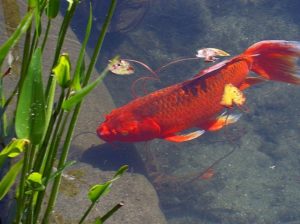
The nights started to get into the mid 60’s, so it was time to bring in ol’ One Eye. When I netted him out I was shocked to see that he was an inch and a half larger than my dominant male and his colors were unbelievable! He had a deep maroon upper half and the bottom half was gold…I kid you not. I mean it was so vibrant that I couldn’t help but wonder what would happen to other fish from my collection if they had the same conditions. The following Spring, I upgraded the filter setup to an internal mag drive pump pushing into a Fluval 403 canister filter with the return line feeding a waterfall. I started keeping Albino Eureka Red Peacocks outside in that pond after the upgrade. You can see the results in my photo (top photo, sorry it’s a little blurry).
There is no match for the magic of natural sunlight and the varied diet tropicals can get outside. A friend of mine kept Red Terrors outside, where they bred for him through the season. Summer vacation outside isn’t just for cichlids, it can also be done with platies, swordtails, guppies and pretty much anything tropical if you have a place for them. Even small patio ponds could be populated with livebearers or tetras. Imagine a school of Cardinal Tetras soaking up those sun rays! Any pond will do as long as it doesn’t get too hot or too cold, and as long the fish have a little cover to protect them from would be predators like herons.
It’s a Jungle Out There
While the benefits are great, there are also some cautions to consider. This time I’d like to talk about some of the dangers and pests that may wreak havoc on our poor little fishies.
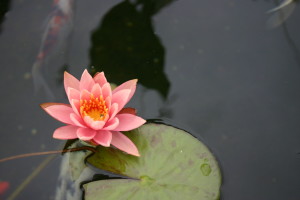
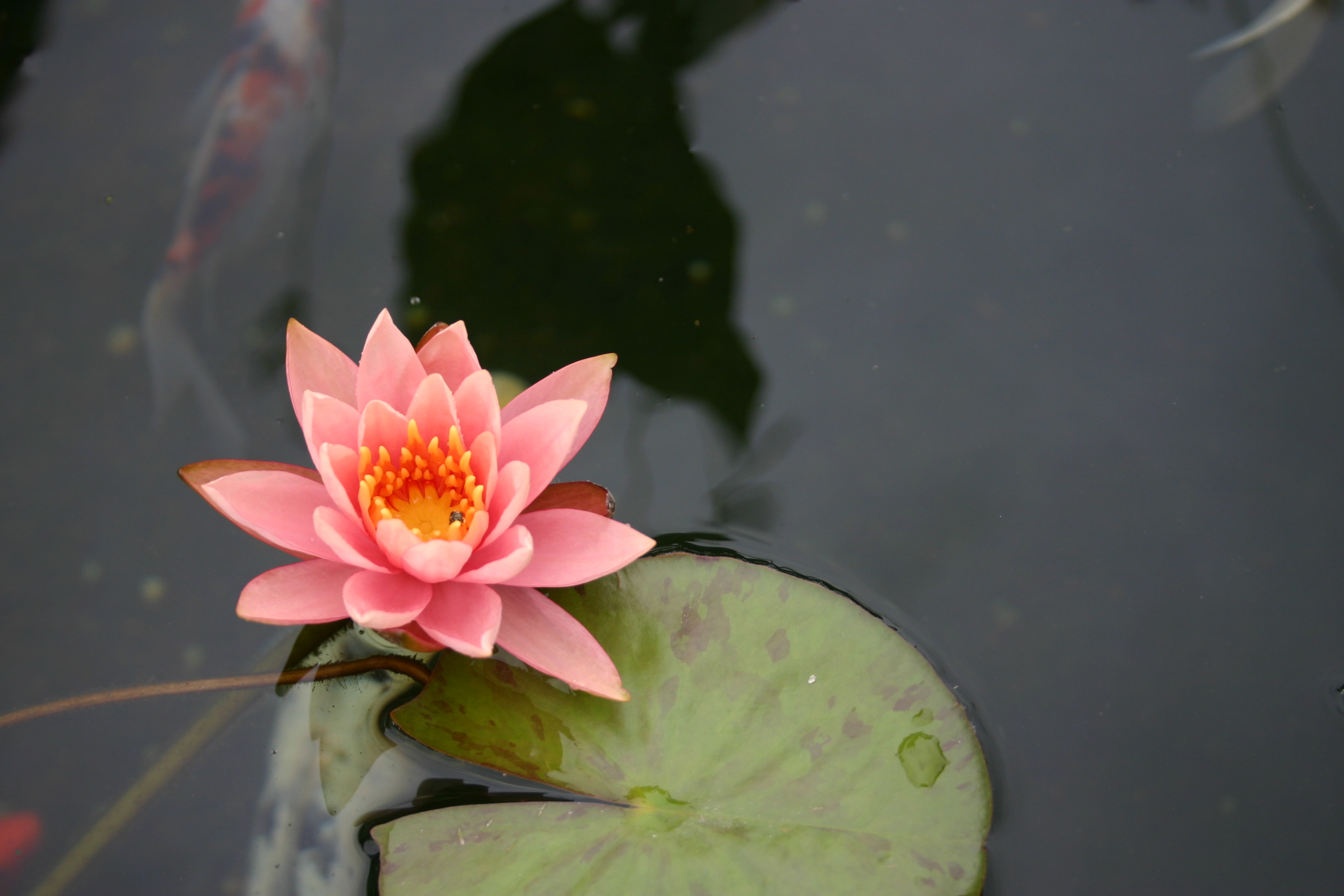
I was lucky not to have my pond visited by pests, but local stray cats, opossums, raccoons, snakes or predatory birds that may decide to visit your pond at any time. Even bugs like dragonfly nymphs can prey on young and small fish. Ample water movement and surface ripples are usually enough to deter them, but more effort may be needed to deter larger predators. There are some easy ways that you can help to protect your fish while they enjoy their outdoor summer vacation. Personally, I would recommend the live plants. You can use floating foliage like water lilies, duck weed or hyacinths for cover and protection for your fish. Young fish will also hide in the roots and feed on the small bugs that live in the roots. Another solution is the use of pond netting. The netting can prevent many predators from snatching your fish out of the water. Not very aesthetic, but effective.
Pesticides and other contaminants may pose a hazard in an outdoor environment. Toxins can be washed into a pond during heavy downpours or may be blown into the 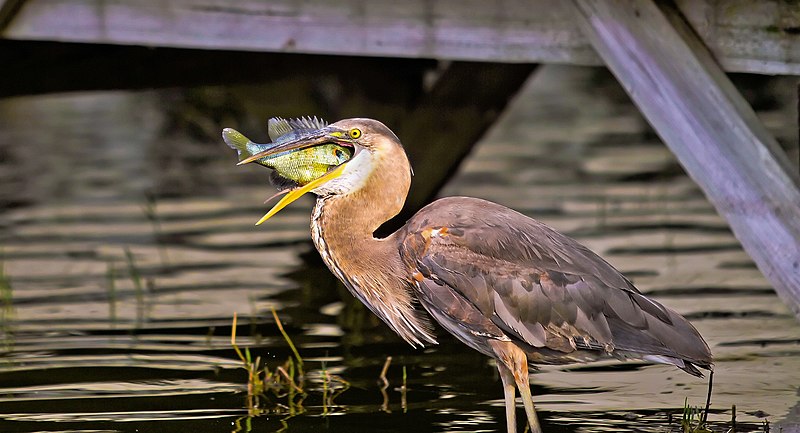 water. The rish is small as long as you stay aware when applying such products…something to keep in mind. Even the rain itself can be a danger to your fish. Acidic rain can drive your ph to low levels if you have a low kh. Depending on the species you’re keeping, such fluctuations can wipe fish out quickly. I was able to keep the kh high and the ph stable with weekly buffered water changes so thi swas never a problem in my experiences.
Closing Time
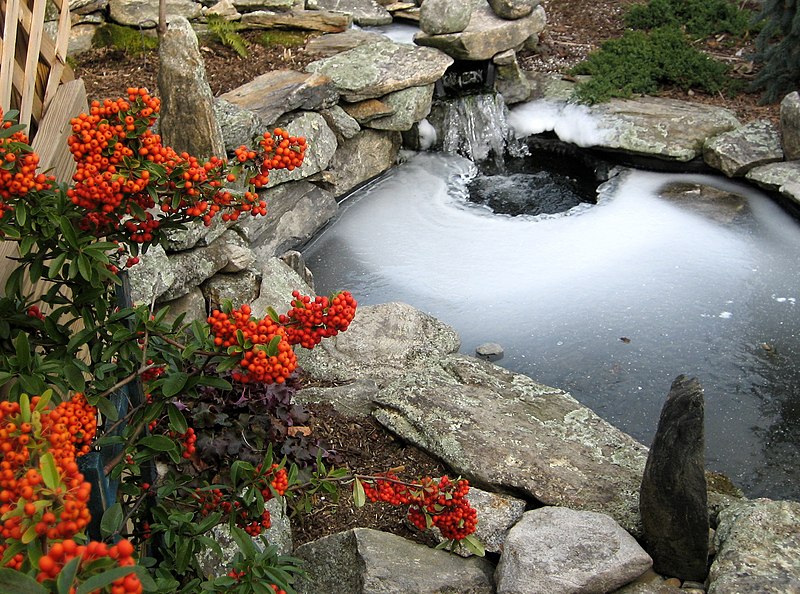
Cool temps are the other concern. It’s important to know when to bring them in. For me, when night temperatures start dipping below 75 F, I know it’s time to bring them back to the tank. You may notice the fish becoming lethargic, and some may even die if you don’t pay close attention at the end of summer. I recommend acclimating them slowly back to indoor temperatures. If the filter running the pond is a canister filter, I would recommend keeping it running on the main tank. Clean it out before bringing it inside, but you’ll be supplying an established filter/biological for your indoor tank, and you don’t have to wait for the whole cycling process. We drain the pond each year and look for babies. You can then either store it till the following year or couple of set it back up in the house for the winter.
I hope this inspires someone else to try some tropicals outside. You wont regret it. Let me know if you have any questions, I’ll be happy to help you out.
Until next time,
Jose
 That Fish Blog – Aquarium Advice and Information