 That Reptile Blog – Reptile, Amphibian and Exotic Pet Care and Information


Another amphibian that breeds in early spring is the strikingly marked spotted salamander, A. maculatum. Reaching 9 ¾ inches in length, these stout animals are jet black with yellow spots, and have been observed crossing snow during breeding migrations (I find them in ponds in southern NY in mid-March).
Amazingly, a species of green algae, Oophila amblystomatis, colonizes the spotte d salamander’s globular egg masses. The algae most likely utilizes carbon dioxide and ammonia produced by the developing salamander embryos, and may in turn provide the embryos with oxygen (although the amount released is quite low). There is speculation that the algae may produce a growth factor that benefits the embryos, but more research is needed. In any event, experiments have shown that egg masses with this algae hatch faster, and with a higher survivorship, than do those lacking the algae. Conversely, algae growth slows markedly if the embryos are removed from the egg mass upon which it is established.
Spotted salamanders make interesting pets, and, while adapted to a burrowing lifestyle, adjust well to life above ground. Properly cared for, they can live for over 25 years. I will discuss them further in a future article.
More detailed information on this unique relationship is available at:
http://jeb.biologists.org/cgi/reprint/197/1/17.pdf



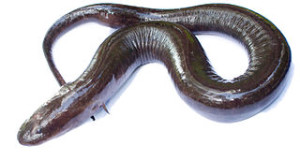
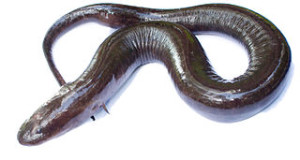
hi ,i just found a black and yellow spotted sala mander in mass. next to boston mass ,i am going to keep it so if any one can tell me what it eats it would be a big help to me and my to young children .so please email me or call me at 508-248-5983 it would help me keep it alive thank you.jon
Hello, Frank Indiviglio here. Thanks for your interest in our blog.
The following link will take you to an article which I wrote on the care and natural history of the spotted salamander:
http://blogs.thatpetplace.com/thatreptileblog/2008/07/11/the-spotted-salamander-ambystoma-maculatum-%e2%80%93-care-in-captivity-part-1/
If you have not kept amphibians before, please bear in mind the following:
They should not be handled other than when necessary and then with wet hands. The mucus coating on their skin rubs off easily, and will leave the animal open to bacterial attack. Children should not be allowed to care for the animal unsupervised – spotted salamanders release toxic secretions when disturbed…these can cause irritation to the eyes, nose and mouth. Hands must always be washed thoroughly after handling any animal…Salmonella is carried as part of the normal gut flora by most wild reptiles and amphibians.
Salamanders collected at this time of the year in MA are in a dormant state, and do not feed until March/April. Yours will become more active when brought indoors, but may not feed. Keep it as cool as possible – an unheated basement is best. Normal room temperatures, especially if the house is well-heated, are too warm for this species.
The water bowl should be shallow and easily exited…water used in the bowl and to wet the substrate must be chlorine-free (please see article for product links).
Earthworms, if available, are an ideal food. Lacking these, ½ grown crickets will suffice, alternated with waxworms (both available at pet stores) and sow bugs (collect below rocks, leaf litter). Please see articles for more information.
Please see the article for further details, and please be in touch if you have further questions.
Best regards, Frank Indiviglio.
Hello, Frank Indiviglio here. Thanks for your interest in our blog.
The following link will take you to an article which I wrote on the care and natural history of the spotted salamander:
http://blogs.thatpetplace.com/thatreptileblog/2008/07/11/the-spotted-salamander-ambystoma-maculatum-%e2%80%93-care-in-captivity-part-1/
If you have not kept amphibians before, please bear in mind the following:
They should not be handled other than when necessary and then with wet hands. The mucus coating on their skin rubs off easily, and will leave the animal open to bacterial attack. Children should not be allowed to care for the animal unsupervised – spotted salamanders release toxic secretions when disturbed…these can cause irritation to the eyes, nose and mouth. Hands must always be washed thoroughly after handling any animal…Salmonella is carried as part of the normal gut flora by most wild reptiles and amphibians.
Salamanders collected at this time of the year in MA are in a dormant state, and do not feed until March/April. Yours will become more active when brought indoors, but may not feed. Keep it as cool as possible – an unheated basement is best. Normal room temperatures, especially if the house is well-heated, are too warm for this species.
The water bowl should be shallow and easily exited…water used in the bowl and to wet the substrate must be chlorine-free (please see article for product links).
Earthworms, if available, are an ideal food. Lacking these, ½ grown crickets will suffice, alternated with waxworms (both available at pet stores) and sow bugs (collect below rocks, leaf litter). Please see articles for more information.
Please see the article for further details, and please be in touch if you have further questions.
Best regards, Frank Indiviglio.
Are there any frog species that have algae with their eggs–or if you see a clump of greenish oggs in spring, do you know they have to be A. maculatum eggs?
I have found eggs in two places in northern Dutchess County (NY) and raised a few of the eggs to morphs each time.
Hi Dawn, Frank Indiviglio here. Thanks very much for your comment and interest.
Algae-egg associations are also known for wood frogs…this has not been as well studied as re spotted salamanders, but it is believed that a symbiotic relationship is also involved. Wood frogs live in your area, and breed at the same time as do spotted salamanders, but they do not lay a large, blob egg mass as is produced by the salamander. This is the only frog egg-algae association I know of. Interestingly, research out of the University of Missouri indicates that algae growing on the skin of American toad tadpoles may be involved in a symbiotic relationship with the tadpoles.
Eggs of tiger, Jefferson’s and Northwestern salamanders also support algae. Tiger salamander egg masses can be confused with those of spotted salamanders, but in NY tigers are limited in range to the pine barrens of Eastern Long Island, and do not occur in Dutchess Co. Jefferson’s salamanders might be found in the area, but their egg masses are much smaller than those of spotted salamanders, and are cylindrical in shape.
If you have a moment, please let me know how long your larvae took to transform, and details concerning temperatures and diet. Thanks very much.
Best regards, Frank Indiviglio.
The eggs were collected in early May, they hatched around May 15, and the first one morphed July 29.They were kept in a basement (temps between 63 and 68). I fed them “dirty water” (pond water) until they were big enough to eat chopped blackworms, and then gave them that until they morphed, when they got small earthworms.
Hi Dawn, Frank Indiviglio here.
Thanks for your feedback….something told me you’d have the details!
It’s interesting to learn that there are still eggs in the water in early May in Dutchess County, NY. In lower Westchester County and on Long Island, spotted salamanders hatch earlier, often by early- mid April. The breeding ponds are sometimes dry by early July, so they need to be out by then.
Some of the same ponds are also used by marbled salamanders, which hatch much earlier than spotted salamanders. They feed upon fairly shrimp and other cold-tolerant invertebrates, and have grown large enough to prey upon spotted salamander larvae once that species begins to hatch.
Great that you were able to sustain them on the small invertebrates found in pond water…that’s the best way to go about raising them, but takes a lot of work and a very dedicated keeper…congrats!
Thanks again, best regards, Frank Indiviglio.
Would it be unusual to see on that is 12″ long?
Hello Janet, Frank Indiviglio here. Thanks for your interest in our blog.
Yes, it would be most unusual…the published record length for a spotted salamander is
9 ¾ inches; the vast majority are 6.5 – 8 inches long.
A close relative, the tiger salamander, does reach 12 inches in length. Individuals in some populations, including those in the NE USA, are often heavily spotted, giving them the appearance of huge spotted salamanders. If you’d like to provide some details, I’ll be happy to look into it further. If the animal you have in mind is indeed a spotted salamander, please let me know – your name will go down in salamander history!
If you are interested in further reading, I have written a book, Newts and Salamanders, that contains a good deal of natural history and captive care information concerning the above 2 and other native salamanders.
Please keep me posted,
Best regards, Frank Indiviglio.
I recently found a spotted salamander in my pond. Its about 4 inchs long and is the largest one ive ever found. After having it for 2 days it laid about 40 or 50 eggs. Ive researched all over the place and people have said to take the eggs out and put them in a seperate tank with more water. That is my current plan but I wanted to make sure before I did anything to them.
Hello Nate, Frank Indiviglio here. Thanks for your interest in our blog.
A 10 gallon aquarium should suffice, although if all survive and grow you’ll eventually need a 15-20 gallon. The water should be aerated mildly, with just enough water flow to keep the eggs slightly in motion. sponge filter operated by a small air pump is ideal.
The adult salamander should be moved to terrarium, as it enters water only to lay eggs and will not thrive in an aquatic set-up. Please see my article on Spotted Salamander Care for more details, and to confirm that we are both referring to the same species.
If you have not raised salamander larvae previously, please bear in mind that it is a difficult, albeit very interesting, endeavor. They will need large quantities of live chopped blackworms or pond-dwelling invertebrates. Following are a few basic considerations… please write back if you’d like further information.
The most important points would be to keep them in a bare-bottomed aquarium with mild filtration and plenty of cover and with food available as often as possible for the first 2 weeks or so.
A sponge filter is the best filtering option for new hatchlings. Frequent partial water changes (i.e. 10% daily for 50 larvae in a 10 gallon aquarium at first, increasing to 50% after 2 weeks) are vital, as the larvae will be producing a great deal of waste each day…don’t let water clarity fool you – ammonia will be present in force! Net out uneaten food (use a brine shrimp net) and rinse the sponge filter daily.
Chopped live blackworms (use a razor blade) can form the basis of their diet…a worm feeder will lessen the likelihood of the worms clumping together (larvae often choke while trying to swallow large balls of worms).
You may also wish to use a brine shrimp hatchery and hatch your own brine shrimp as a dietary supplement.
You’ll need to separate out the smaller animals and change the diet a bit as they grow – please be back in touch as time goes on.
Enjoy!
Best regards, Frank Indiviglio.
Two weeks ago we found some salamander eggs in our creek (at least we THINK they are salamander eggs). It’s a shallow creek and there were probably 100 tiny white eggs surrounded in a clear gel. The clutch was stuck to a rock with a little water flowing over them in the middle of the creek. We took about 10 of them and left the rest but I’m wondering what 2-wk-old eggs should look like b/c they look exactly the same as when we got them. Should they have changed at all? They do have the algae on them now. How do we know if they were even fertilized? We’re in Mason, Ohio, just north of Cincinnati. Thanks for any help you can provide. 🙂
Hello Shannon, Frank Indiviglio here. Thanks for your interest in our blog.
I apologize for being so long in responding. The delay was caused by a technical difficulty which has now been resolved.
They are likely salamander eggs, but there are quite a few species in your region that lay in flowing water, so identification as to species is difficult. Spotted salamanders usually deposit eggs in the still waters of vernal ponds, rather than creeks.
The eggs should show some development within 2 weeks. The embryos, visible through the jelly, begin to resemble small, black commas (,) as they grow, and can sometimes be seen to move about. If the eggs are opaque or “chalky” in appearance, they are likely not fertile of have expired…the algae is probably opportunistic; not all species utilize it as do spotted salamanders.
Eggs laid in flowing water usually need to be kept cool and well-aerated if they are to hatch, as the embryo’s have high oxygen requirements. The adults of some species native to your area often live alongside creeks, below stones. Please be in touch if you locate any and would like assistance in indentifying them
Enjoy looking around, Best regards, Frank Indiviglio.
Hello, I live in Falcon, Colorado. Back in december I rescued a Barred Tiger Salamander that was oddly out during a snow storm. I found some eggs while I was cleaning her enclosure, is there a chance that she was pregnant ?
Hello Naomi, Frank Indiviglio here.
Thanks for your interest in our blog and for relaying your most interesting observation.
Tiger salamanders are quite cold tolerant…here in NY the Eastern subspecies breeds in late winter, sometimes crossing snow to reach breeding ponds. However, to find one out and about in an actual snow storm is quite unusual to say the least! They usually migrate to the ponds in groups, each sex separately. Perhaps yours was unearthed by the storm, but then again they usually hibernate well below ground.
The eggs are not likely to be fertile…tiger salamanders lay within a day or so after fertilization, and are not known to store sperm. Males deposit sperm packets on the pond bottom and lead females over them. Females take the packet into the cloaca, and fertilization is, unlike frogs, internal.
It is, however, fortunate that she passed the eggs, as if retained they can cause a fatal infection. In all my years of working with salamanders, I cannot recall one laying so long after the breeding season…she may have been stimulated by a rise in temperature.
Well, thanks for 2 notes that are new to me…that’s the great thing about working with animals, you just never know!
Good luck and please let me know if you need any captive care information. A book I’ve written, Newts and Salamanders, may be of interest to you as well.
Best regards, Frank Indiviglio.
Her enclosure has been at the exact same temperature since I put her in it, could she have stored her mates sperm ? Since she is a what you call a terrestrial salamander would she lay her eggs in water or on land ?
Thanks for your interest in our blog.
Tiger salamanders lay in the water…they are not known to store sperm.
Good luck and please keep me posted.
Best regards, Frank Indiviglio.
I went to the library today, there I checked out a book about salamanders and it said that the subspecies of my salamander are capable of storing their last mates sperm, then wait for the right conditions to lay their eggs. now she has been guarding these eggs, is that what a salamander does when they lay their eggs ?
Thanks for your interest in our blog.
Some salamander species do guard eggs….male hellbenders and giant salamanders and female marbled salamanders, for example. However, tiger salamanders do not, or at least have not been recorded to do so. Please let me know what you observe, however, as we have much to learn.
Thanks for the information on sperm storage… it seems that more and more creatures are being found to do this. I guess queen termites hold the record…a single mating allows the female to lay viable eggs for 20 years or more!’
Good luck and please keep me posted.
Best regards, Frank Indiviglio.
Good morning, I have a pair of marbled salamanders and a clutch of eggs found in south east Missouri. I would like to know if there is anyway we can keep these inside and try observing them as they hatch? If so, can you tell me what we need to provide? So far they have a bowl of damp red clay mud, I keep it sprayed with purified water ad papertowels over the bowl, putting in small worms so far and shallow dish of water. Can you give us some information on caring for these salamanders and the eggs, if this is even possible. Thank you so much! Dee
Hello Dee, Frank Indiviglio here.
Thanks for your interest in our blog. You’ve found a very interesting animal which can live for 15 years or more if cared for properly.
The eggs, however, are not easy to hatch in captivity; marbled salamanders have a unique reproductive strategy that differs from all other native salamanders. They lay in the fall, (on land) along depressions that will fill with water in early spring. The female stays with the egg, guarding them from predators and keeping them moist; her attention may also be necessary to prevent mold/fungus formation – for this reason, eggs rarely hatch if the female does not stay with them (not sure if yours is actually wrapped around the eggs?). I know of 1 or 2 successful attempts in zoos (without female) – the eggs were kept in a moist location ( a depression in some gravel with a water reserve below); after 1 month the area was flooded and the eggs hatched. You might try this 0 use spring or dechlorinated water, not distilled).
As regards captive care, you can keep them as is described for spotted salamanders here. Temperature is important, as mentioned – they often succumb to fungal attack as temperatures reach the mid 70’s. See the article for substrate ideas, etc. They will become quite bold and even feed from tongs.
Earthworms are best as the diet mainstay – you may want to set up a colony so you’ll have a supply in winter (hard to dig in Missouri in winter, I hear!)– let me know and I’ll refer you to an article. You can also but ¼-1/4 inch crickets and waxworms – please write back if you need details on keeping/using these.
You might find my book, Newts and Salamanders, useful if you decide to keep these fellows long-term.
Good luck, enjoy and please keep me posted – I’d be interested in hearing how all goes with the eggs, as they are not often kept in zoos or private collections.
Best regards, Frank Indiviglio.
I found some of the salamanders in a green swimming pool. The water was literally toxic and now I keep them because there is nowhere to put them. I need to find out what they eat, and what type they are. There are 2 of them and they look like the one in the picture.
Hello Olivia, Frank Indiviglio here.
Thanks for your interest in our blog.
In most parts of North America, it’s still early enough in the season to release the salamanders…please let me know your approximate location and I’ll advise. You can read about their care here http://blogs.thatpetplace.com/thatreptileblog/2008/07/03/the-spotted-salamander-ambystoma-maculatum-%e2%80%93-part-i-natural-history/. As you’ll see, they are not the easiest animals to provide for if you have not had much experience with amphibians…I can help you to locate a rehabber or herp society if you believe they need medical attention. Until then, you can keep them n a well-covered aquarium or ventilated plastic sweater box with damp leaves and a shallow bowl of water.
Good luck and please keep me posted.
Best regards, Frank Indiviglio.
Hey Frank, I found a spotted Salamander half an inch long in my back garden. Because I saw your earlier posts, I am not sure that is normal. Could it be another breed?
Thanks!
Hello Valentine,
They vary a great deal, with some having spots that are more orange than black; however, blue-spotted and slimy salamanders are somewhat similar. Please check out these photos for some ideas, and let me know if you need more info.
Best, Frank
Frank I have a few questions regarding an egg mass I discovered on my property. I believe it belongs to the spotted salamander. If you coukd email me that would be great. Erikblaise@gmail.com
Hi Erik,
Please post your questions here so that others may benefit from your experiences, thanks, Best, Frank
Im trying to create ideal hatching conditions and could use a little assistance. Currently they are in my kitchen. But Im wondering if its to warm.
I live near Roanoke VA, I went out hunting for amphibians and other critters because it reached a temp of 55 today. I found a fantastic vernal pool and there were 3 egg masses near one another maybe containing roughly 75 eggs. they are most deffinitely salamander eggs but not familiar with all the local species here as I am from Vermont. I am trying to confirm if these eggs belong to a spotted salamander,how old the eggs are and if I can hatch them ondoors. Thanks Frank
Hi Erik,
Thanks for you observation;;;I found spotted salamanders breeding on Feb 10th in Ct, despite lots of snow on the ground. Spotteds would be likely in VA, but mole, tiger and certain others also lay early, and form similar egg masses. they could have been deposited anytime from late January on…hatching time depends upon temperature. The eggs can be hatched indoors in an aquarium supplied with mild aeration; eggs may hatch without aeration, but the hatcgh rate will likely be lower. Using a sponge or corner filter is useful as well. The young are highly cannibalistic and require large quantities of live food..chopped blackworms are best. Please let me know if you need further info on raising the young. Enjoy, best, Frank
Its incredible they lay theyre eggs so early! Im hoping all goes well and they hatch successfully. I hope it doesnt take too long, im excited for them to hatch! Will keep you updated, thanks for the speedy reply especially considering how far back the original post goes. Walk softly,
Erik
Hi Erik,
My pleasure…please keep me posted; I get notices of all comments and will get back to you right away. They are said to cross snow to reach breeding ponds, as do Tiger salamanders…those I saw bred 2 days after a blizzard..considering that they hibernate on land, some distance from the water, they must have done so..wish I could have seen that. They and similar amphibs are being studied with a view toward developing a way to freeze human organs for future transplantation (and who knows what else!). A natural antifreeze prevents cell death…amazing. best, frank
Frank, the eggs I have are blackish with a white horizonal band wrapping across the center of the eggs, any thoughts?
Hi Erik,
No way to ID via description, but spotted salamanders are generally the more common of the possible species in your region. Best, Frank